
Clear aligners in Bab Ezzouar, Algiers, Algeria
With clear aligners, teeth move step by step: each removable tray is worn 22 hours a day, then the next one takes over after 10 to 15 days.
What is an aligner?
An aligner is a thin tray of clear plastic, made from an impression of your teeth. While worn, it gently pushes the teeth a small, pre-planned distance; the next tray carries on until they reach the position set in the treatment plan. At Beausourire, a dental practice in Bab Ezzouar, in the east of Algiers, Algeria, treatment starts with an in-person examination that tells you whether aligners suit your case.
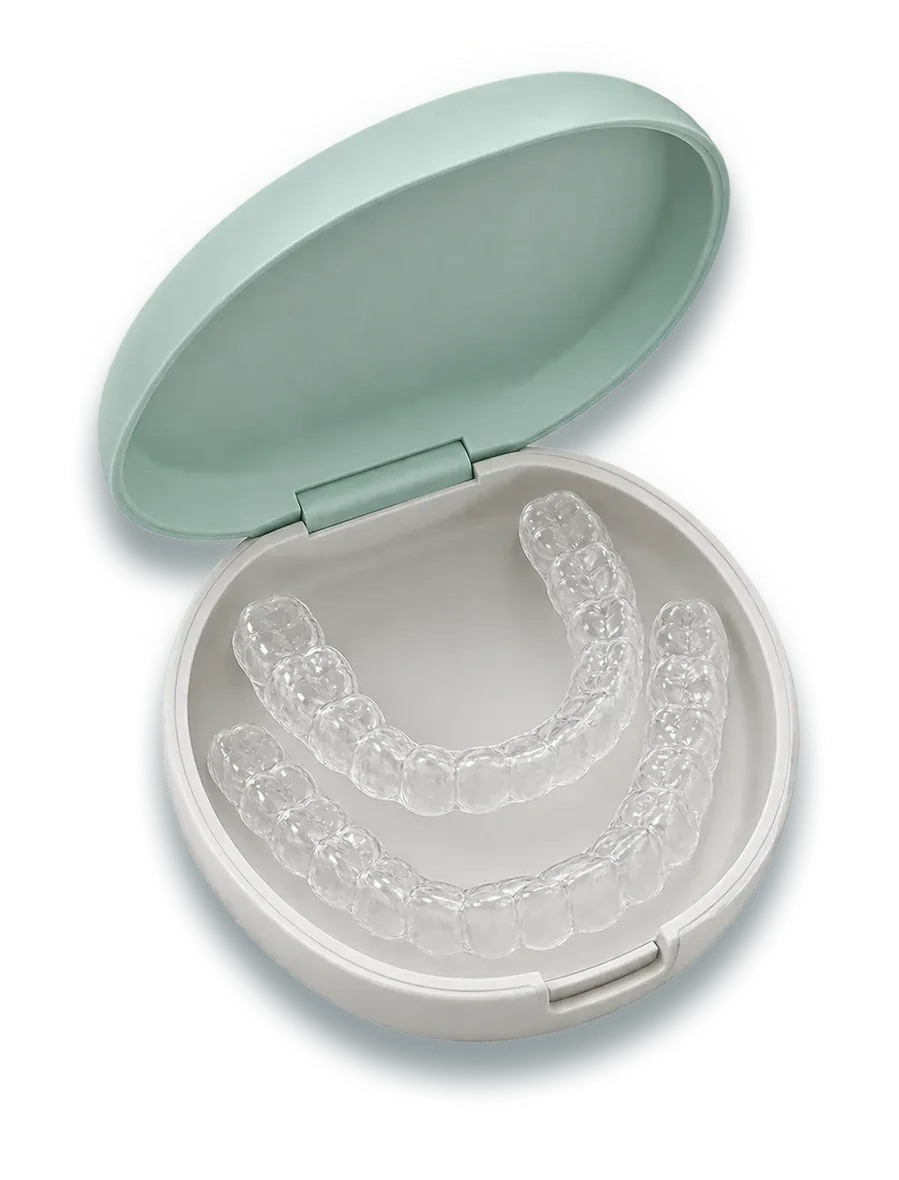




A series of trays
Depending on the case, treatment uses anything from a handful of trays to several dozen. At this practice, each is worn for 10 to 15 days before moving on to the next.
Out only for meals and brushing
They come out for a meal or a brush and then go straight back in: the rest of the time, day and night, they stay in your mouth.
Discreet, not invisible
They are hard to spot, but up close they show, especially when small tooth-coloured bumps, called attachments, are bonded to some teeth.
Not a whitening tray or night guard
Whitening trays and night guards for grinding look similar, but neither is designed to move teeth. On this page, a tray always means an orthodontic aligner.
Which cases are aligners suited to?
Aligners suit many adults and teenagers whose teeth are out of line, provided teeth and gums are healthy and the trays can be worn almost all the time. An examination at the practice will tell you whether yours is one of them. Before starting, Dr Babaammi asks every patient for very good oral hygiene, care when putting the trays in and taking them out, keeping to the wear time and following the instructions given throughout treatment.
Often treated with aligners
- Teeth that have moved again since earlier orthodontic treatment
- Mild to moderate crowding
- Some moderate bite problems, after assessment
- Gaps to close between teeth
May need a fuller assessment or another option
- A treatment plan that involves extractions
- Difficulty keeping up 22 hours of wear a day
- Decay or gum problems to treat first
- A marked mismatch between the upper and lower jaw
In published studies, aligners and fixed appliances give comparable results when no extractions are planned; with extractions, fixed appliances generally do better. This evidence is still limited: the studies are hard to compare with one another and their follow-up is short.
What patients write about the practice
-
Cela fait plus d’un an que ma dent a été soignée chez eux, et je suis toujours très satisfaite du résultat. À tel point qu’il m’est impossible de distinguer la dent soignée de mes dents naturelles. Merci infiniment
Assia Soltani
-
"Je recommande vivement cecabinet.Très professionnel, à l'écoute, et extrêmement minutieux. Excellent travail, avec douceur et précision. Je me suis sentie en confiance dès le début, et le résultat est impeccable. Merci bcp.
Sara Souachi
-
Je tenais a vous remercier sincerement pour l'excellent travail accompli je suis trés satisfaite du résultat équipe professionnelle et gentille
Nihad Hariti
-
Très propre agréable un service parfait un accueil chaleureux franchement je conseille fortement
Anis Anis
-
Vraiment excellent travail merci beaucoup docteur
Heuss
-
كانت تجربتي معاهم رائعة جدًا. الاطباء محترفين ويشرحو كل خطوة بكل وضوح، واهتمو براحة المريض طوال فترة العلاج. النتيجة كانت ممتازة وخدمتني أسناني بشكل جميل بعد العلاج. أنصح به بشدة لكل من يبحث عن دقة واهتمام في علاج الأسنان
Fadoua Fif
-
طبيبة ماشاء الله ترتاح لها وخدمتها ماشاء الله اتقان نظافةوحسن الاستقبال.
hayat astuces افكار تدابير روتينات
-
Je tiens à vous remercier du fond du cœur pour votre professionnalisme, votre gentillesse et votre bienveillance. Vous prenez le temps d'expliquer chaque étape et de mettre vos patients en confiance, ce qui fait toute la différence. Merci pour la qualité de vos soins et votre patience. Je recommande ce cabinet avec grand plaisir .
ZIRI BIJOUX
What are the stages of aligner treatment?
Treatment goes through six stages: examination, impression and 3D plan, fitting, tray changes, check-ups, then the end of treatment and the retainer. The number of trays and the gap between check-ups depend on your case.
-
Step 1: The examination
A clinical examination with photos of the face and teeth; X-rays are taken outside the practice. Decay and tartar are dealt with first, and you receive a written quote.
At the practice
-
Step 2: The 3D treatment plan
An intraoral scan, taken on the day of the examination, is used to prepare the 3D plan with a colleague who practises orthodontics. A video of the simulation is then sent to you.
The trays are made: how long this takes depends on the case
-
Step 3: Fitting
You receive your first trays and are shown how to use them. Attachments may be bonded to some teeth; sometimes a few tenths of a millimetre of enamel are removed between two teeth.
At the practice
-
Step 4: Changing trays
You move to the next tray at the prescribed pace: at this practice, every 10 to 15 days.
By yourself, at the prescribed pace
-
Step 5: Check-ups
At each visit, the teeth are checked against the plan. If needed, a new impression is taken to order finishing trays.
At the practice, during treatment
-
Step 6: End of treatment and retainer
The attachments come off; a retainer then takes over to hold the teeth in place.
At the practice
How long does aligner treatment take?
Aligner treatment takes from a few months for a minor problem to often more than a year for a more complex case. The length depends mainly on how far the teeth need to move and how steadily the trays are worn; finishing trays can add time.
At this practice, aligner treatment usually takes 4 to 9 months for a simple case, 9 to 18 for a moderate one and 18 to 24 for a complex one; the length of yours is estimated when your case is studied.
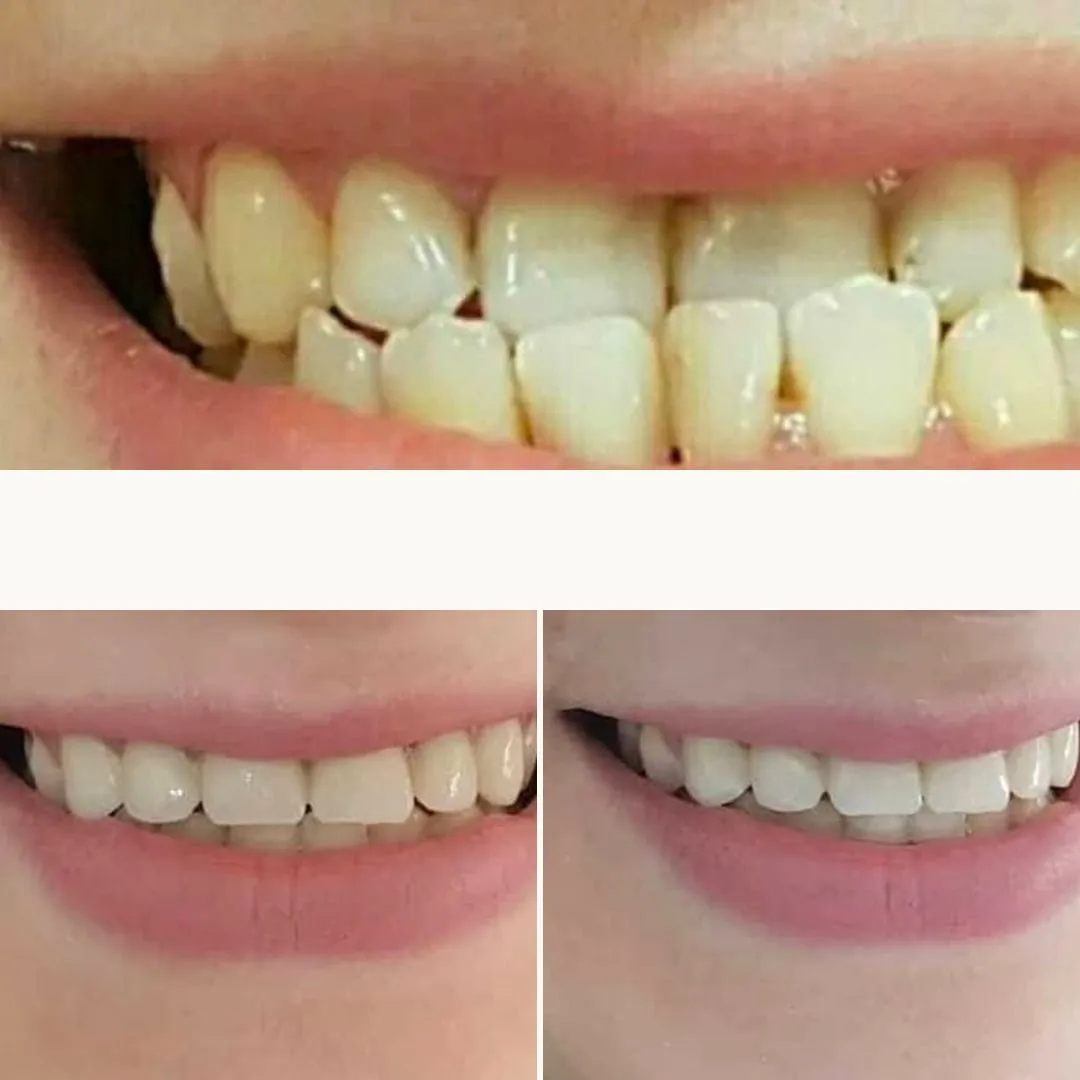
Free consultationBefore and after, at the practice
Aligners or braces: what really differs
| Criterion | Clear aligners | Braces (fixed appliance) |
|---|---|---|
| Appearance | Clear and discreet; small attachments can be seen up close | Visible metal brackets, or less noticeable ceramic ones |
| Removable or fixed | Removable: out for meals and brushing, usually worn 20 to 22 hours a day | Fixed: bonded until treatment ends; elastics are sometimes needed |
| Meals | No food is off limits: the trays come out for meals | Hard or sticky food best avoided |
| Results in published studies | Comparable without extractions; generally weaker with extractions | Comparable without extractions; generally better with extractions |
| Appointments | Regular check-ups at the practice, at a pace set by the case | Wire adjusted in the chair, usually every 6 to 8 weeks |
Can I have aligner treatment if I live abroad?
Aligner treatment started in Algeria cannot be done entirely at a distance. The examination, fitting the first trays and the end of treatment take place at the practice, and in-person check-ups are still needed along the way; between visits, follow-up continues remotely.
Living in the UK, France, Canada, Belgium, Germany or the Gulf? How many trips you need depends on your case: request the examination first, for a date when you will be in Algeria, then plan the trips that follow.
To prepare the trip (photos, X-rays, payment, documents for your insurer), see also the guide “Dental care in Algiers, Algeria, when you live abroad”.
Three things shape the planning
- How long your stays in Algeria last
- How long the trays take to be made, between impression and fitting
- The gap between check-ups
Keeping the result: the retainer
Can teeth move back afterwards?
Yes: after any orthodontic treatment, teeth tend to move back towards their old position. A retainer holds them where treatment put them.
Wire or tray
A thin wire bonded behind the teeth, a clear tray, or both. The practice offers both kinds of retainer.
For the long term
A retainer is worn for a long time. Here, the tray is worn day and night for the first 6 months, then only at night; what follows is agreed with Dr Babaammi.
Looking after it
A bonded wire is checked at dental visits. A retainer tray wears out over time and may need replacing.
How much do aligners cost at the practice?
From
100,000 DA
one arch (upper or lower)
From
150,000 DA
both arches
What the price includes
- The scan
- The 3D simulation
- Every tray
- Attachments and enamel reduction
- Finishing trays if needed
- Every check-up and the retainer
Paying in three instalments
40% at the start, 30% after 6 months, 30% at the final stage. An instalment already paid is not refunded if treatment stops.
Ways to pay
Cash, an Algerian CIB or Edahabia card, bank transfer.
Documents provided
An Algerian treatment form (feuille de soins) for insurance claims, and a quote or invoice you can give an insurer abroad.
Aligners: answers to common questions
How many hours a day should I wear aligners?
Aligners are usually worn 20 to 22 hours a day, which means day and night. They come out only to eat, to drink anything other than water and to brush your teeth, and go straight back in afterwards. At Beausourire, you are asked to wear them 22 hours a day.
Do aligners hurt?
Pressure is common at the start of each new tray, as the teeth begin to move, and it usually eases within a few days. An edge can also rub the gum. Tell the practice about any pain that lasts.
What are the downsides of clear aligners?
The trays are worn 22 hours a day and come out to eat or drink anything but water. Each new tray brings a few days of pressure, a slight lisp is possible at first, and attachments can be seen up close. Aligners are also less suited to cases that need extractions.
Can I eat and drink with aligners in?
Remove them to eat and to drink anything other than water: hot drinks can warp the trays, coloured ones can stain them, and sugar trapped underneath encourages decay. Brush before putting them back. With the trays out, no food is off limits.
How do I clean the trays?
Rinse them each time you take them out, brush them gently with cold or lukewarm water, then keep them in their case. Avoid hot water, which can warp the plastic.
What if I wear the trays less than I should?
Worn less, the trays move the teeth less than planned: the next one stops fitting well, and a new impression and extra trays are sometimes needed, which makes treatment longer.
How many appointments will I need?
The number of appointments depends on the case: an examination, a fitting, regular check-ups, then a final visit for the retainer. At Beausourire, check-ups are about every 6 months, with remote follow-up between visits.
What if I lose or break a tray?
Contact the practice straight away and go back to the previous tray, kept in its case: do not go several days without one. If you are abroad, a new tray is made and sent to you within about 7 days.
Is there an age limit for clear aligners?
There is generally no upper age limit for adults whose teeth and gums are healthy. For teenagers it depends on growth and on steady wear; for young children, other appliances are often used.
What does aligner treatment cost in Algeria?
At Beausourire, aligner treatment costs from 100,000 DA for one arch (upper or lower) and from 150,000 DA for both. The price includes the scan, the 3D simulation, every tray, attachments and enamel reduction, finishing trays if needed, every check-up and the retainer; X-rays are taken outside the practice. The exact price varies with the complexity of the case; you receive it in a written quote before you commit.
Does the aligner brand change the treatment?
The principle is the same from one brand to another: made-to-measure trays worn one after another, following a plan. Beausourire works with more than one brand, Invisalign among them; at the examination, ask which brand will be used for you.
Are aligners bought online the same as treatment with a dentist?
No. Moving teeth without an in-person check of the gums, roots and bite carries risks. Aligner treatment needs an examination and follow-up by a dentist.
Find out whether aligners suit your case
The form could not load. Reload the page or try again in a moment.
How it works
- You choose a consultation at the practice or online, and a time.
- The practice calls you to confirm the day and time.
- The consultation takes place at the practice in Bab Ezzouar, Algiers, or online, as you chose.